Lifespan and maintenance
| Criterion | Wood (use class 4) | Metal (galvanised + powder-coated steel) |
|---|---|---|
| Resistance to permanent moisture | Good if correctly classed — use class 4 is precisely the class intended for permanent contact with water or ground | Very good once the anti-corrosion treatment is applied |
| Indicative lifespan | Roughly 15–20 years with regular maintenance, by comparison with other wooden structures in permanent contact with water | Roughly 40–70 years for hot-dip galvanising meeting EN ISO 1461, more depending on exposure |
| Routine maintenance | Stain or sealant to reapply periodically, especially on horizontal surfaces where water pools | Minimal once the finish is applied — visual inspection, no periodic treatment |
Load rating: the real difference that’s often overlooked
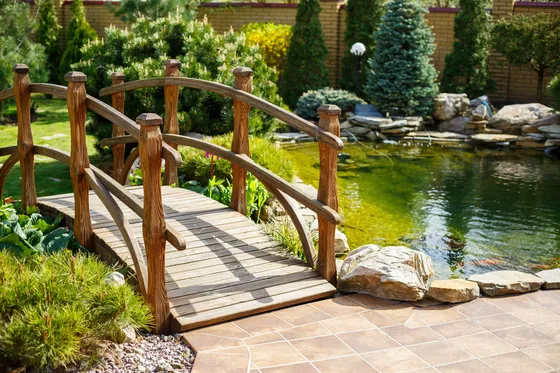
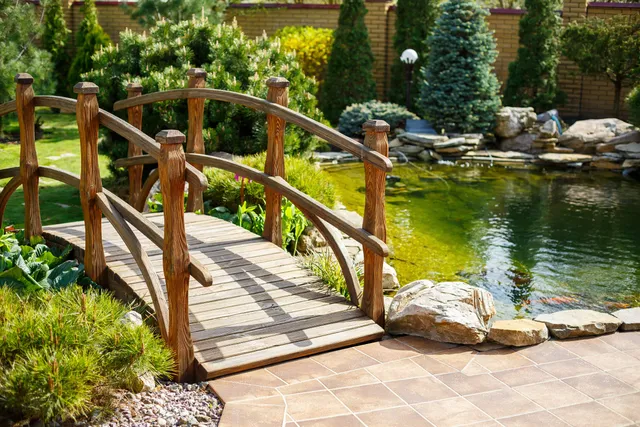
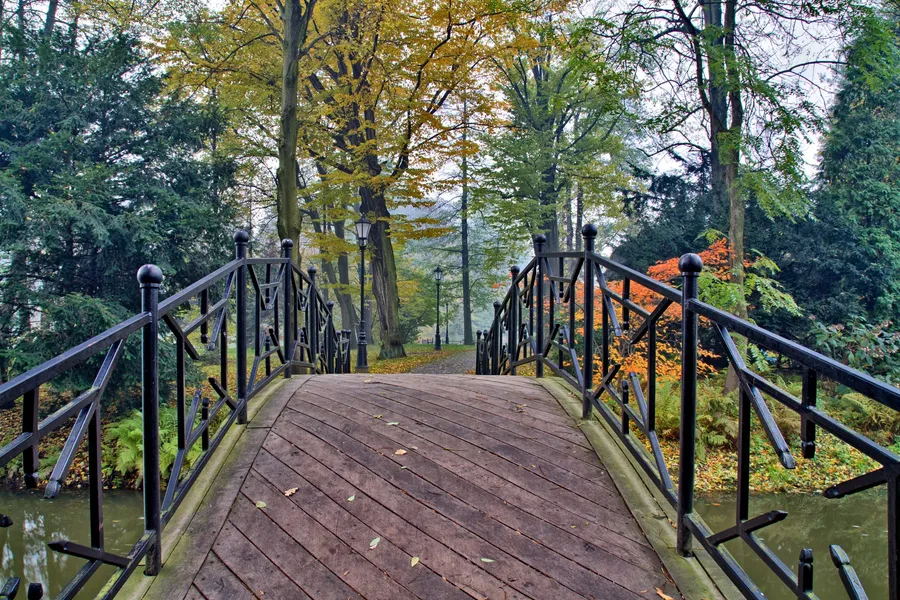
This is the least visible point at purchase time, and the most important: some garden bridges sold at major retailers — wood and metal alike — are decorative objects, not load-bearing structures. Some wooden models are rated for just 5 kg: they’re not designed to be crossed by a person. Sturdier metal models can be rated up to 150 kg. A custom bridge, wrought iron or steel, is by contrast sized for the actual intended use from the design stage — see our span and sizing page.
Budget
Wood generally costs less to buy for a small decorative model, but the comparison stops there for genuine load-bearing use: a decorative wooden kit isn’t a substitute for a custom structure sized for regular crossing, whatever the material. Our breakdown of price factors explains what actually moves the budget for a custom metal bridge.
When wood still makes sense
For a strictly decorative use — over a small pond, with no regular crossing planned — a wooden kit bridge meets the need at a lower cost. The question to ask before buying: will the bridge actually be crossed, and by whom (adult, child, wheelbarrow)? If the answer is yes, the load rating of the chosen model becomes the deciding factor, not just the look.
Frequently asked questions
Can class 4 wood stay in permanent contact with a pond’s water?
Yes, that’s precisely the intended use of this use class — unlike untreated or lower-class wood, which would degrade quickly in permanent contact with moisture.
Is metal always more durable than wood?
Provided it’s properly treated against corrosion (galvanising, powder-coating) — untreated metal exposed permanently to moisture actually degrades faster than wood classed for that use.
How do I know if a garden bridge can really be crossed?
The load rating stated by the manufacturer or workshop is the only reliable indicator — similar looks don’t guarantee a similar load capacity between two models.